St Cyprien, Dordogne Market
Situated on the hillside above the beautiful Dordogne River, St Cyprien (4.5km from Le Chevrefeuille) dates back to 620AD – when a clever hermit called St Cyprien took residence in a cave overlooking the valley. As he whiled away his time ogling the remarkable view, he likely imagined the future of this bustling, bright little village, earmarking in his imagination that on Sundays St Cyprien would hold one of the brightest, most colourful and fresh farmers markets in all of the Dordogne.
And, wow! How right he was!
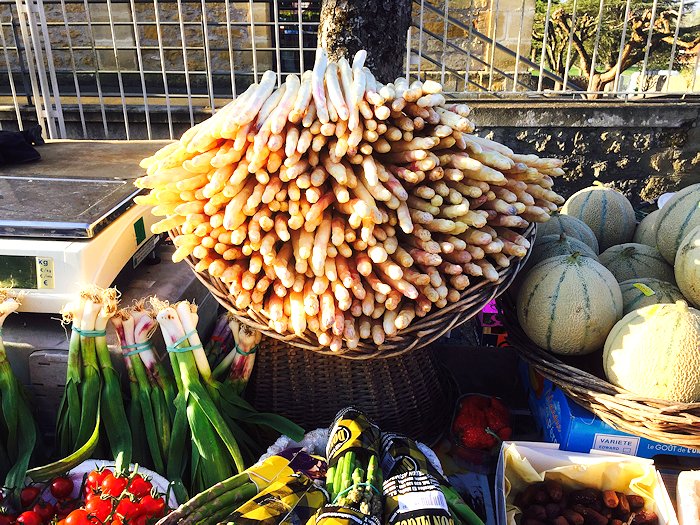
The St Cyprien market is one of colour, fun and produce galore. We kick off our cookery course market tour by descending into the ancient heart of this pretty village, which beats with all the jolly colours, scents, tastes and sounds one expects from a traditional Perigordian farmers market.
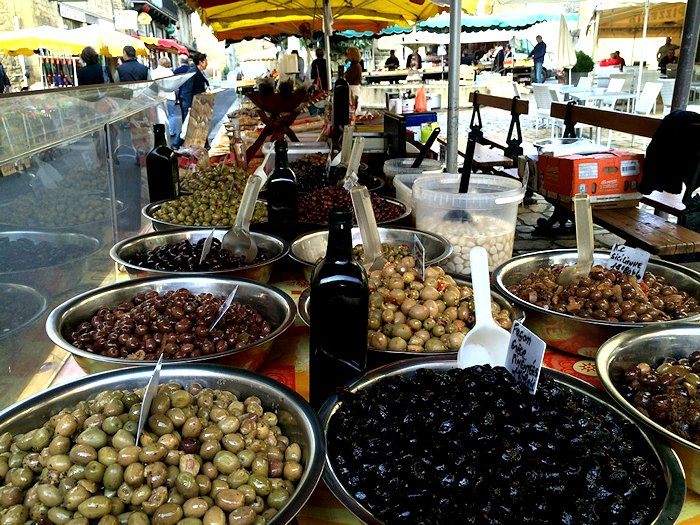
Stalls burst with local duck and goose products. Olives – black, green, stuffed and pitted glisten – even on the rare days when the golden Dordogne sun isn’t shining. Walnuts bulge in over-stuffed sacks and there’s fish so fresh they appear to flip and flop before your eyes. There’s an assemblage of goat’s cheese that would have even the most savant, cheese-loving mouse hard pressed to choose just one, and if that’s not enough tasty-weight to add to your basket, there’s oils, honey, spices, fruit, vegetables, and – of course – bread.
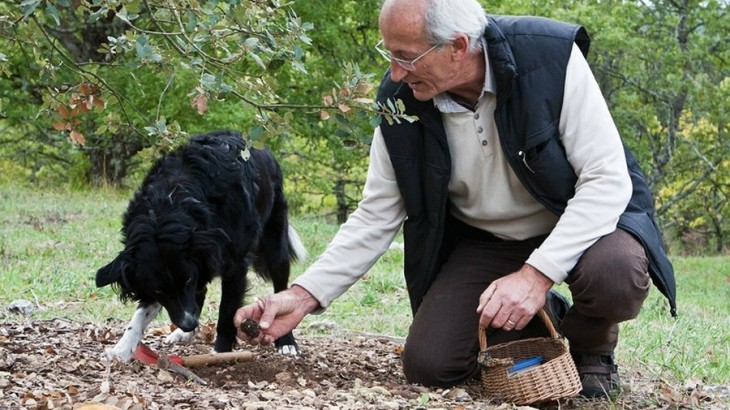
If you’re lucky to hit the season after the rains of autumn when the trees blaze orange and yellow before succumbing to the nudity of winter, and the sun shines almost every other day, then keep your eyes open at market for the truffles, wild cepes and girolles this area is famous for. They’re precious, a little on the pricey side, odd-shaped, much-sought-after, delicious little fun-ghi!
The market at St Cyprien is held every Sunday.
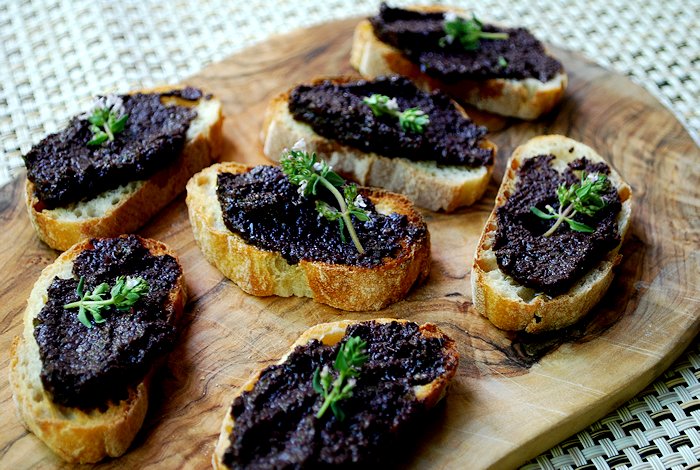
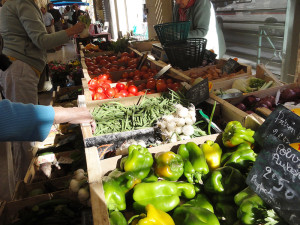 On good days , and most days are good, the Dordogne sun transforms ripe peppers to fire, honey to melted gold, and olives into baroque jewels.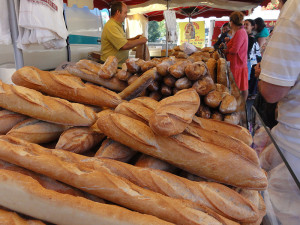
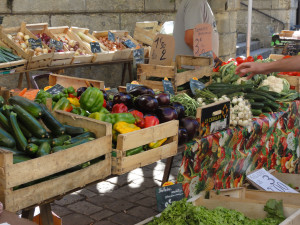 The supermarket has invaded France not only the big towns but villages too. People patronise it because they can save money and find items the weekly market dont carry. But in the end nothing replaces the open market, the vitality and enthusiasm of buyers and sellers, and the pleasure of doing business in this uncomplicated way. Nowhere else is the food so genuinely fresh from the earth and the hand that harvested it. Nowhere else does the wide blue sky, the warm sun and gentle breeze attend the act of marketing, not shopping but marketing, raising it from a humble necessity to a high art.